
 Facebook
 X
X
 Pinterest
 Copy Link
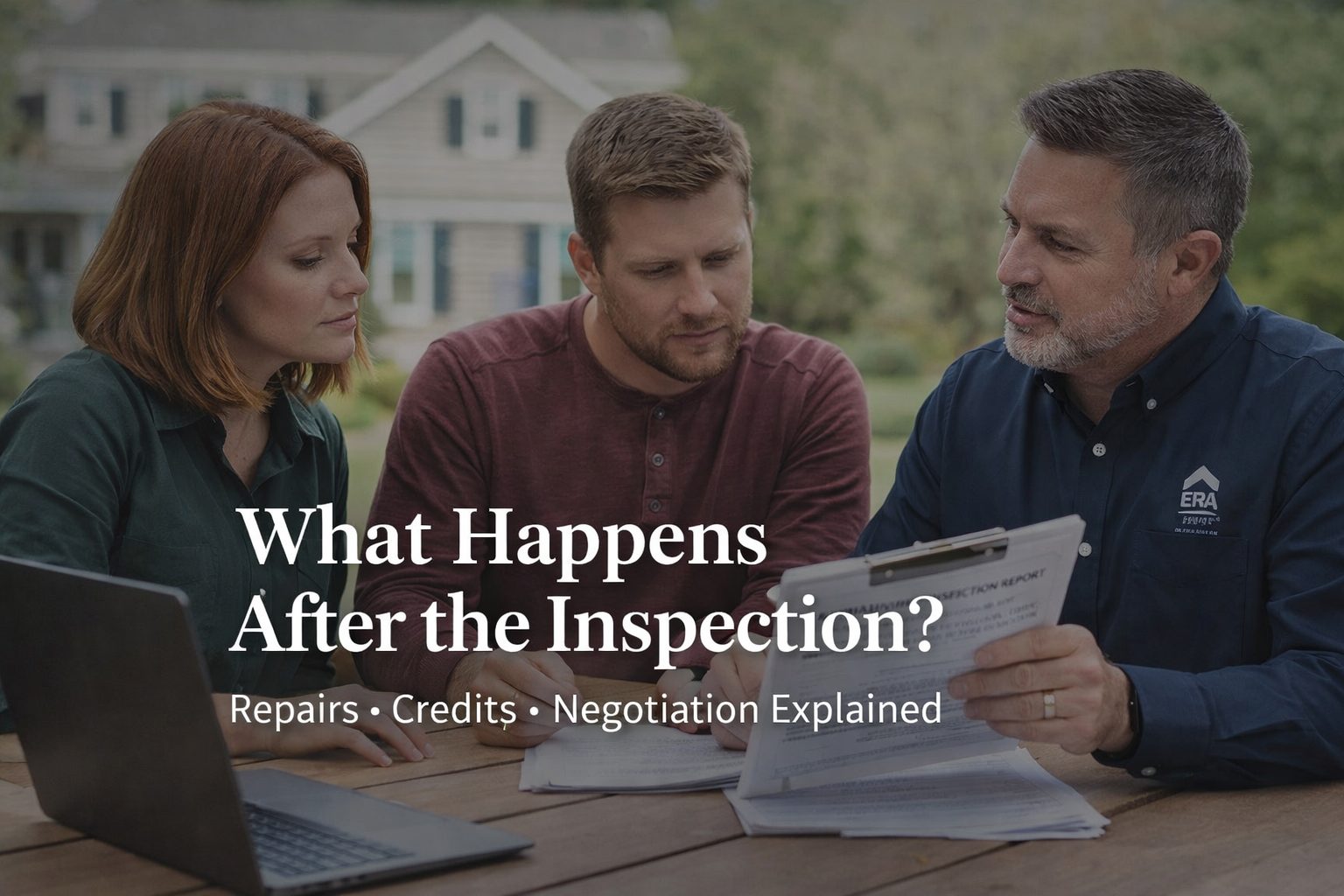
If you’ve never bought a home before, the inspection can feel like the most stressful part of the entire process.
You go from excited…
to staring at a 30-page report wondering if you just made a mistake.
So what happens after a home inspection? That’s the part many buyers aren’t fully prepared for
The inspection is where the real conversations start — not where deals fall apart.
Let’s talk about what actually happens next.
But first, If you’re still learning what inspectors actually look for during a home inspection, you may want to start with the previous step in the Buyer Series: Home Inspections: What Really Matters (and What Doesn’t).
Step 1: Review the Report Without Panic
Almost every inspection report looks long. Even on well-maintained homes.
Inspectors document everything:
-
Loose outlets
-
Minor roof wear
-
Caulk cracking
-
HVAC age
-
Small plumbing drips
That doesn’t mean the house is “bad.”
Your job (and my job as your agent) is to separate:
-
🔴 True structural/safety concerns
-
🟡 Major cost items
-
🟢 Normal homeowner maintenance
Not every item deserves a repair request.
Step 2: Decide What’s Reasonable to Ask For
This is where strategy matters.
Reasonable requests usually involve:
-
Roof leaks
-
Electrical hazards
-
Plumbing issues
-
Structural movement
-
Active water intrusion
-
Major system failures
Not reasonable (most of the time):
-
Cosmetic issues
-
Minor wear and tear
-
Old but functioning systems
-
Small handyman items
Remember — you’re buying a resale home, not a brand-new construction.
Step 3: Repairs or Credit?
You generally have three options:
1️⃣ Ask the seller to make repairs
2️⃣ Ask for a credit at closing
3️⃣ Accept the home as-is
In many cases, credits are cleaner.
Why?
Because you control:
-
The contractor
-
The quality of work
-
The timeline
It also keeps the deal moving instead of turning into a back-and-forth repair battle.
Step 4: Negotiation Happens
The seller can:
-
Agree
-
Counter
-
Refuse
-
Offer partial credit
This isn’t personal.
It’s business.
And how it plays out depends on:
-
The market
-
How competitive the property was
-
How strong your original offer was
-
Whether the seller needs to sell
This is where experience matters.
You don’t want to:
-
Overreact and kill a good deal
-
Or ignore something that could cost you thousands later
There’s a balance.
The Big Picture
The goal of the inspection phase isn’t to “win.”
It’s to protect your investment while keeping perspective.
Most deals don’t fall apart because of inspections.
They fall apart because of emotion.
When buyers stay calm, focused, and strategic, inspections become a tool — not a threat.
💬 Final Thought
The inspection phase is about clarity — not fear.
You’re not looking for a perfect house. You’re looking for a solid one.
When you understand what’s reasonable to request, what can be managed later, and how negotiations actually work, the stress level drops dramatically.
In the next post in this Buyer Series, I’ll walk through what happens if negotiations stall — when to push, when to compromise, and when walking away is actually the right move.
Buyer Series Navigation:
Next Step: When Inspection Negotiations Stall: When to Push, Compromise, & Walk Away
– Shawn Long
ERA Martin Associates | Shawn Sells Delmarva
Serving Maryland’s Eastern Shore
Real estate doesn’t have to feel overwhelming — you don’t have to figure it out alone.
